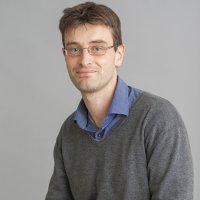
Jurgen Popp
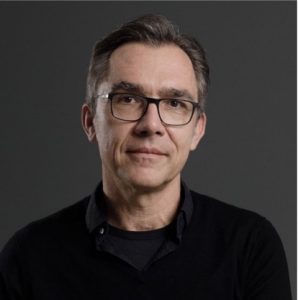
Jürgen Popp studied chemistry at the Universities of Erlangen and Würzburg. After receiving his PhD in chemistry, he went to Yale University for postdoctoral work. He then returned to the University of Würzburg where he habilitated in 2002. Since 2002, he has held a chair in physical chemistry at the Friedrich Schiller University of Jena. Since 2006 he is also the scientific director of the Leibniz Institute of Photonic Technology, Jena. His research interests focus on biophotonics. Professor Popp has received numerous awards for his research, including the prestigious Pittsburgh Spectroscopy Award in 2016. In 2023, Jürgen Popp received an honorary doctorate from the University at Albany – State University of New York (USA) and the Charles Mann Award from the Federation of Analytical Chemistry and Spectroscopy Societies (FACSS).
Renato Zenobi
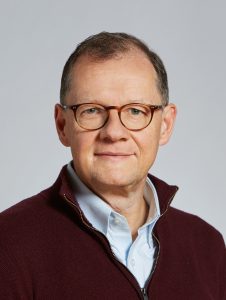
Renato Zenobi is Professor of Analytical Chemistry at the Organic Chemistry Laboratory of the Swiss Federal Institute of Technology (ETH) Zurich. He received a M.S. degree from the ETH Zurich in 1986, and a Ph.D. at Stanford University in the USA in 1990. After postdoctoral appointments at the University of Pittsburgh (1990 – 1991) and at the University of Michigan (1991) he returned to Switzerland in 1992 as a Werner Fellow at the EPFL, Lausanne, where he established his own research group. Assistant professor at the ETH in 1995, associate professor in 1997, and full professor in 2000. Chairman of the Organic Chemistry Laboratory in 2002-2003 and 2011-2012, served as the president of ETH’s university assembly from 2006 – 2008, and of the lecturer’s conference at ETH Zurich 2006 – 2010. Zenobi was a visiting professor at the Barnett Institute (Boston) in 2004/2005, and at the Institut Curie (Paris) in 2010. In 2010 he was appointed Associate Editor of Analytical Chemistry (American Chemical Society). He has chaired the 2014 International Mass Spectrometry Conference in Geneva, Switzerland.
Zenobi’s research areas include laser-based analytical chemistry, electrospray and laser-assisted mass spectrometry, ambient mass spectrometry, and near-field optical microscopy and spectroscopy. He has made important contributions to the understanding of the ion formation mechanism in matrix-assisted laser desorption/ionization (MALDI) mass spectrometry, and to ambient ionization methods. He is well known for the development of analytical tools for the nanoscale, in particular TERS (tip-enhanced Raman spectroscopy), a spectroscopic methodology with ≈ 10 nm spatial resolution.
Elena Buixadeiras
 I’m a Spanish scientist living in the Czech Republic since 1996. I defended my PhD Thesis in 2001, in Bilbao, University of the Basque
Country, Spain, on Spectroscopic investigation of lattice dynamics and its disorder in ferroelectric and related materials. From 2001 to 2002 I was a Junior researcher in the Department of Dielectrics, Institute of Physics, Academy of Sciences of the Czech Republic, Prague.
From 2002 to 2003 I was a Post-doc fellow (Le Studium) at CNRS-CNRHT, Orleans, France. Since 2004 I am a senior researcher in the Department of Dielectrics, Institute of Physics, Czech Academy of Sciences, in Prague. In 2005 I was awarded with the Otto Wichterle Prize of Academy of Sciences of the Czech Republic for young researchers.
Currently, and since 2023, I am the Head of the Group on Light and Neutron Scattering at the Institute of Physics in Prague.vI’m an author of about 80 scientific publications, including several reviews a chapter book, with about 1600 citations. I have several running scientific projects on ferroelectric and antiferroelectric materials. I am specialist in Infrared, Raman, broad-band spectroscopy, phase transitions, lattice dynamics, phonons, (anti)ferroelectrics, relaxors, etc. I’m also interested in disordered systems which challenge traditional ordered crystals, and in new materials with exotic structures, including topologica defects. I have several postdocs and PhD students in my group, and I am also a mentor at the Institute of Physics. Apart from science, I have two sons, I write and translate poetry. My primary hobby is music.
Nicola Marzari

Nicola Marzari holds the Chair of Theory and Simulation of Materials at EPFL, where he also directs the National Centre on Computational Design and Discovery of Novel Materials MARVEL. He heads the Laboratory for Materials Simulations at the Paul Scherrer Institut and holds an Excellence Chair at the University of Bremen. He took up the post of Cavendish Professor of Physics at the University
of Cambridge (UK) in September 2025, transitioning there in 2026. Previously, he held the Toyota Chair for Materials Processing at the Massachusetts Institute of Technology and was the inaugural Statutory Chair of Materials Modelling at the University of Oxford (UK). He received a Laurea in Physics from the University of Trieste and a PhD in Physics from the University of Cambridge. His research is dedicated to the development and application of electronic-structure simulations to understand, predict, and design the properties and performance of novel materials and devices.
Claudia Conti
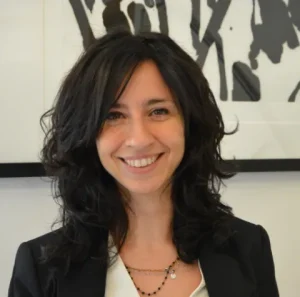
PhD in Materials Engineering and senior Researcher at the Institute of Heritage Science (ISPC) of the National Research Council (CNR). Her research interests are focused on the development of advanced non-invasive Raman methods and their application to Cultural Heritage materials.
She is coordinating the Raman Spectroscopy Laboratory at ISPC: https://www.ispc.cnr.it/en/2021/02/18/spettroscopia-raman-lab/
Matteo Tommasini
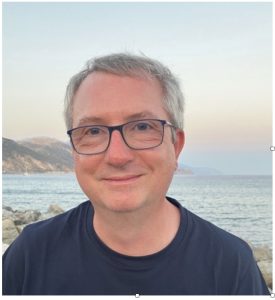
Full professor of Materials Science and Technology in the Department of Chemistry, Materials and Chemical Engineering “Giulio Natta” at Politecnico di Milano. He coordinates the Vibrational Spectroscopy group (VISPEC) within the Società Italiana di Ottica e Fotonica (SIOF).
He has investigated the spectroscopic behavior of materials since completing his thesis in Nuclear Engineering (1998) and earning his PhD in Materials Engineering (2002) under the guidance of Professors Chiara Castiglioni and Giuseppe Zerbi. His research focuses on characterizing molecular materials using electronic and vibrational spectroscopy techniques interpreted through quantum chemical methods. The investigated systems include nanostructured carbon, graphene molecules, organic functional materials, and polymers. For clinical applications, he also examined drug detection methods that utilize Surface-Enhanced Raman Spectroscopy (SERS).
He has co-authored approximately 200 scientific papers published in peer-reviewed international journals; h-index: 44; ORCID: https://orcid.org/0000-0002-7917-426X
Lorenzo Bastonero

Lorenzo Bastonero received his B.Sc. and M.Sc. in Physics at the University of Torino. He is concluding his Ph.D. at the University of Bremen, under the supervision of Prof. Dr. Nicola Marzari. He spent several research stays at EPFL and Harvard University, and lectured at international schools and workshops, such as the “CHARISMA School on Raman”, the “African MRS”, and the “Advanced Quantum ESPRESSO school”. His research focuses on developing automated first-principles approaches covering a broad range of applications, including vibrational spectroscopies for materials characterization, accurate electronic structure methods for transition metal compounds, and active learning strategies for accurate training of machine-learning interatomic potentials
Andrea Lapini
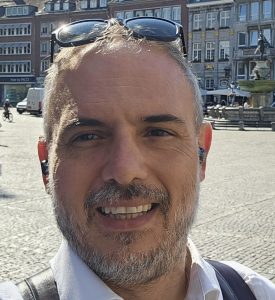
I graduated in Chemistry from the University of Florence, where I received my PhD in Chemical Sciences in 2009. Until 2016, I was a postdoctoral fellow at LENS, focusing my research on the study of structural dynamics using ultrafast femtosecond spectroscopy (Vibrational and Electronic). I was a permanent researcher at the National Institute for Metrological Research (INRIM) in Turin from 2018 to 2021, working in the field of CARS microscopy. From 2021 to 2024, I was a tenured Assistant Professor (rtd-B) at the Department of Chemical, Life Sciences and Environmental Sustainability at the University of Parma, becoming an Associate Professor in March 2024. I currently teach the laboratory courses in Physical Chemistry I and Introduction to Molecular Spectroscopy for the Bachelor’s and Master’s degrees in Chemistry, respectively. My research interests continue to focus on the study of structural dynamics and energy and charge transfer processes in molecular systems using time-resolved spectroscopy.
Renzo Vanna
Ivano Alessandri